
The Challenge of Dominican Roofs
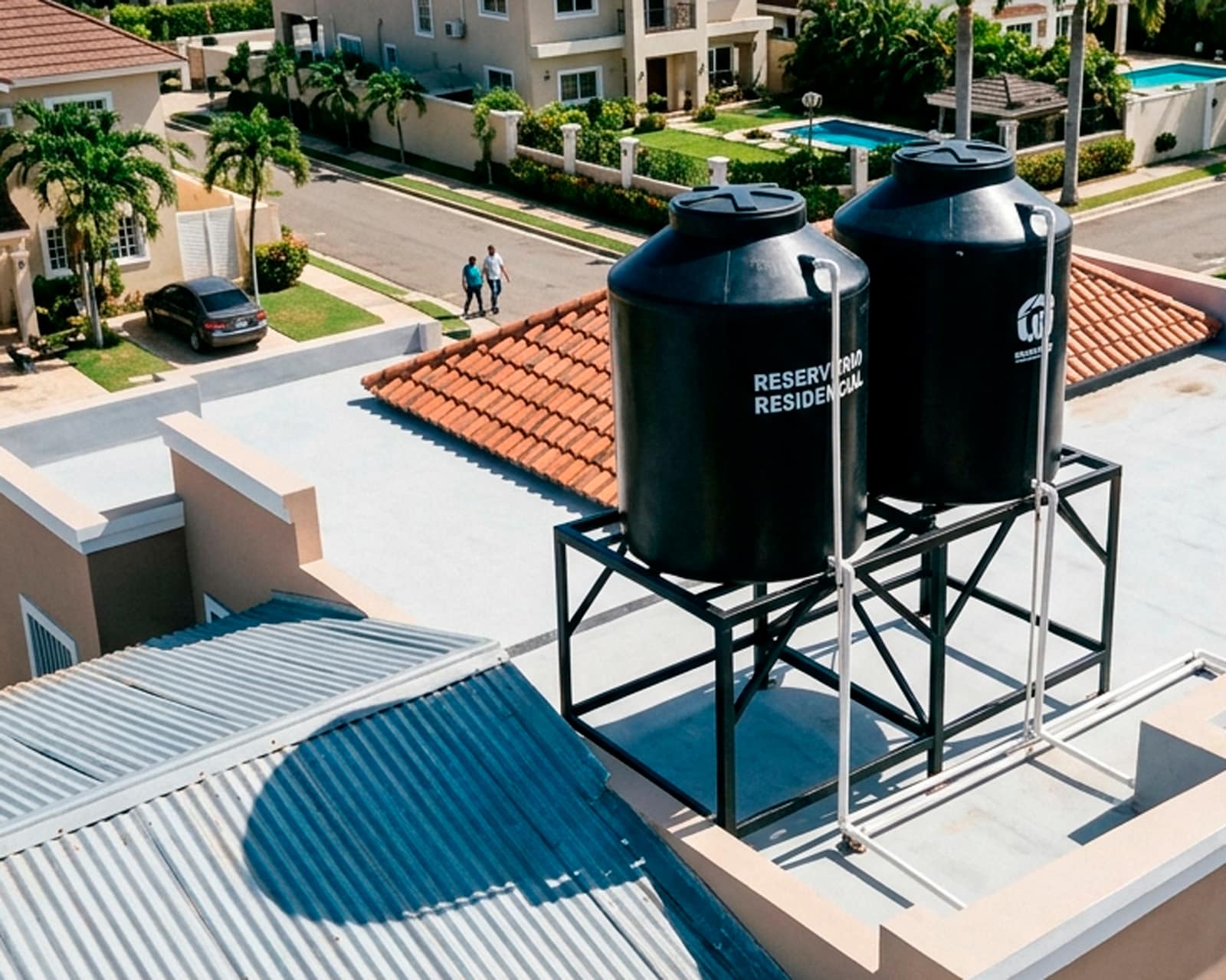
In the Dominican Republic, designing photovoltaic solutions is not a generic task; it’s an engineering challenge that we at RAAS Solar solve with mathematical precision. The architecture of our homes, characterized by multiple levels, parapets, and the ubiquitous presence of water tanks , generates an ecosystem of dynamic shadows that can drastically reduce production if not managed correctly. Under the intense Caribbean sun, every minute of shadow cast by a water tower on a poorly configured panel translates into a direct economic loss.
We selected the Tesla Powerwall 3 as the core of our installations precisely because of its ability to handle the complexities of Dominican rooftops. We seek not only energy independence but also climate resilience in the face of grid fluctuations and the ferocity of our hurricane season, where technical robustness makes the difference between continuity and darkness.
Thematic Analysis: MPPT as an Efficiency Engine
Maximum Power Point Tracking (MPPT) is the brain that allows the system to negotiate with each panel to extract the maximum possible power, adjusting the voltage and current in real time. In an environment with physical obstacles, having multiple MPPT trackers is vital for the following reasons:
- Independent String Management: By having separate inputs, we can group panels into different “strings.” This ensures that the performance of one group is not affected by the behavior of another.
- Shade Effect Isolation: If a water tank casts a shadow on “String A” at 3:00 PM, independent MPPTs ensure that “Strings B and C” continue to harvest 100% of the afternoon sun without interference.
- Compatibility with High Power Panels: The Powerwall 3 supports a short-circuit current (Isc) of 30 A by MPPT , allowing us to use the latest generation and high efficiency panels demanded by the current Dominican market.
Tesla Powerwall 3 : Next Generation Architecture
The Powerwall 3 is a radical evolution that integrates a hybrid solar inverter, eliminating the need for external equipment and optimizing space. Its design is not only aesthetically pleasing; it’s a technical marvel with IP67 certification , meaning the battery and electronics are submersible and resistant to flooding up to 60 cm, a crucial factor for safety in areas prone to torrential rain.
Key Technical Specifications
| Feature | Technical Details |
| Usable Capacity | 13.5 kWh |
| Continuous Power (On-Grid) | Up to 11.5 kW |
| Number of MPPTs | 3 separate entrances |
| Maximum Short Circuit Current (Isc) | 30 A by MPPT |
| Solar to Battery Efficiency | 89% |
| Solar Grid Efficiency | 97.5% |
| Starting Capacity (LRA) | 185 A |
| Environmental protection | IP67 (Submersible Electronics) |
| Warranty | 10 years |
Solution to Shadows from Water Tanks: Tactical String Management
RAAS Solar ‘s true engineering is evident in the string design. In a typical Dominican scenario, while the rooftop water tank partially shades a group of panels at sunset, our configuration leverages the Powerwall 3’s three MPPTs to ensure the rest of the array continues operating at full capacity. This tactical segregation minimizes the impact of architectural obstacles, maximizing the client’s return on investment.
Furthermore, the Lithium Iron Phosphate (LFP) chemistry of the Powerwall 3 is superior for our climate. Unlike gel batteries, which are susceptible to heat and have a limited lifespan (4-8 years), LFP cells offer:
- Thermal Safety: A much higher thermal “runaway” threshold, ideal for tropical heat.
- Longevity: An operational life of 10 to 15 years with deep discharge cycles without premature degradation.
Power for the Dominican Home: Load Shedding and Starting
The Powerwall 3 is designed for the realities of residential energy consumption on the island. Its 185 LRA (Locked Rotor Amps) capacity provides the necessary power to start the compressor of a 5-ton central air conditioner, overcoming the initial current surge that causes other backup systems to fail.
For intelligent management during extended power outages, we use the integrated dry contact relay (60V/2A) . This tool allows us to automate load shedding , disconnecting non-essential loads—such as the pool pump or water heater—to preserve 13.5 kWh exclusively for essential needs: lighting, cooling, and air conditioning in the main room.
Integration and Full Support: Generators and Network
Although our goal is solar energy independence, the Powerwall 3 integrates seamlessly with external generators for extended backup power. In terms of efficiency, the comparison is stark: a diesel generator consumes between 0.34 and 0.43 liters of fuel per kWh produced , a high and “dirty” operating cost compared to the free energy of the sun stored in lithium.
Furthermore, our solution is a legal risk mitigation strategy. Under Law 90-19 on noise pollution, the use of noisy generators in residential areas can result in fines and neighborhood disputes. The Powerwall 3 operates silently, meeting the standards of “Quiet Zones” and ensuring peace in your home.
The Victory of the Sun over the Shadow
At RAAS Solar , we transform complexity into simplicity through engineering. With the advanced architecture of the Tesla Powerwall 3, water tanks and shading are no longer obstacles to energy independence, but rather simple variables that we manage with cutting-edge technology.
Your home deserves a system that not only captures energy but manages it intelligently to meet the demands of our climate and regulations. We invite you to take the step toward a robust, quiet, and uninterrupted solar future. With RAAS Solar and Tesla, the shadow no longer has power over your energy.
